
Denier, Dtex and Filament Count: How to Specify Polyester Yarn
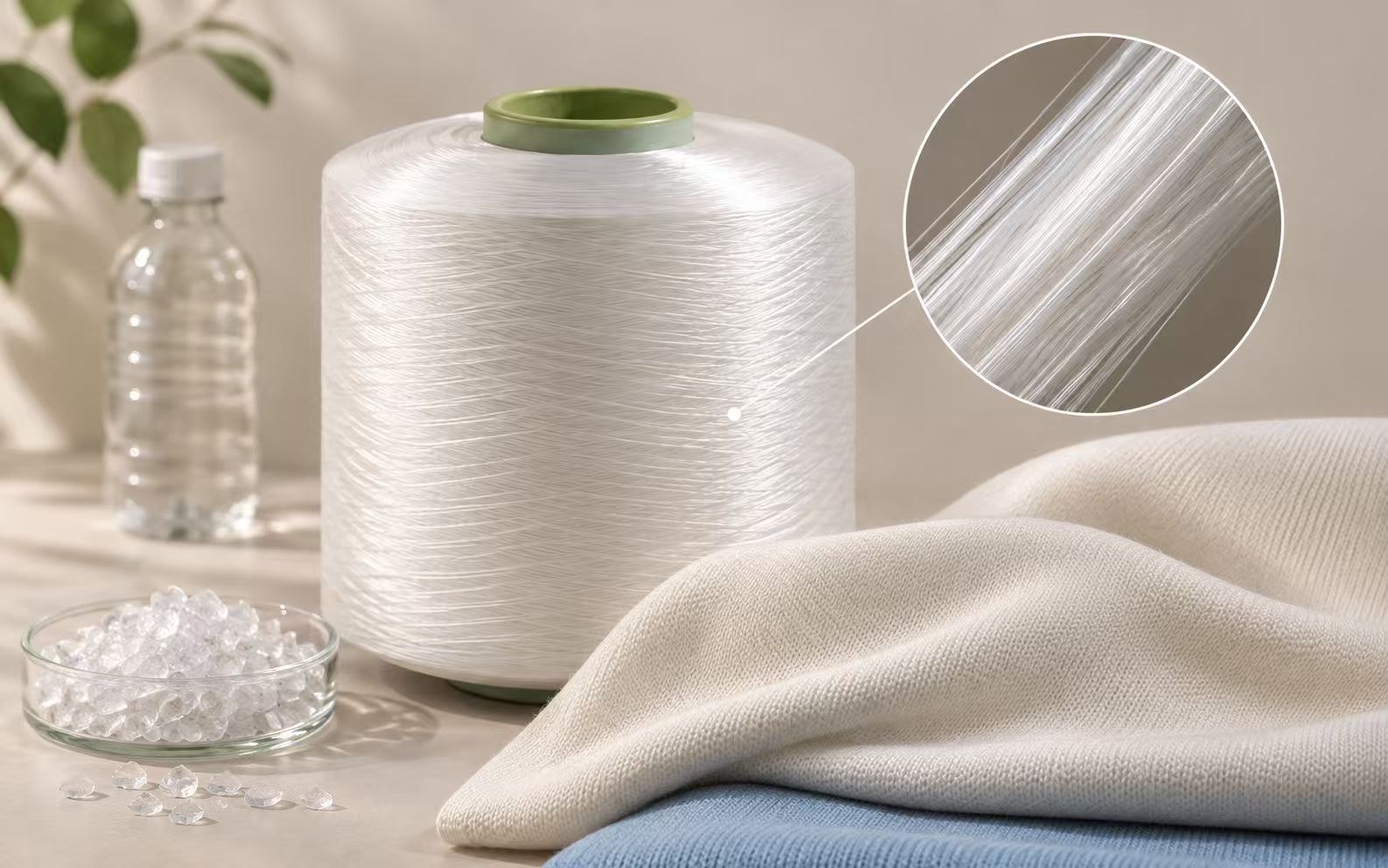
A polyester yarn quotation may begin with a short code, but that code represents several purchasing decisions. Linear density, filament count, texturing, twist and package requirements can all influence processing and the resulting fabric. A useful specification makes each element clear enough for the buyer and supplier to compare the same material.
For knitting mills, weaving mills and textile developers, the starting point is the intended fabric. Use the following guide to translate a yarn label into a practical sampling and purchasing brief.
1. Understand what denier and dtex measure
Denier and decitex describe linear density: the mass of yarn over a defined length. Denier is the mass in grams of 9,000 meters of yarn. Decitex, abbreviated dtex, is the mass in grams of 10,000 meters.
The conversion follows directly from those definitions:
- 1 denier = 10/9 dtex, or approximately 1.111 dtex.
- 1 dtex = 0.9 denier.
- As an illustrative conversion, 75 denier is approximately 83.3 dtex.
These examples explain the units; they are not ANKU product specifications. When comparing quotations, put both values in the same unit and confirm the nominal specification and agreed tolerance.
2. Read the filament count alongside the yarn size
In common polyester filament notation, a label such as 75D/72F describes a nominal 75-denier yarn containing 72 filaments. Dividing the overall denier by the filament count gives the nominal denier per filament, often called DPF. In this illustrative example, 75 divided by 72 is approximately 1.04 DPF.
At the same total denier, a higher filament count generally means finer individual filaments. This can influence surface character and handfeel, but the finished effect also depends on cross-section, texturing, construction and finishing.
For composite or combined yarns, ask whether the stated count refers to one component or the completed yarn assembly. Supplier notation needs an explicit definition before different offers can be compared.
3. Identify the yarn form and processing state
Record whether the material is POY, FDY, DTY or another specified construction. These descriptions relate to the yarn’s production or processing state and help establish which downstream operations are expected.
A textured yarn can have a different apparent volume and surface from a flatter filament construction at a similar nominal linear density. Where crimp or elasticity affects measurement, agree on the relevant test method, conditioning and measurement tension.
Our POY, FDY and DTY buyer’s guide provides background on the main processing routes and recycled polyester considerations.
4. Specify twist, intermingling and appearance
Twist and intermingling are separate yarn characteristics. Twist describes the turns introduced along the yarn and should include its direction and stated unit. Intermingling uses air entanglement to help filaments hold together; any requested level or assessment should have an agreed definition.
Discuss these details in relation to the machine and fabric being developed. Yarn cohesion, friction, unwinding and surface appearance can affect the processing trial. Confirm the relevant characteristics rather than relying on a short commercial abbreviation alone.
Also record the intended luster, color or dyeing route, and any special cross-section or functional component. Keep descriptive terms linked to a reference sample or technical information.
5. Connect the yarn specification with fabric GSM and handfeel
Yarn linear density measures mass per length, while fabric GSM measures mass per area. A yarn denier cannot be converted directly into finished fabric GSM without information about construction and yarn consumption.
For woven fabrics, yarn spacing, weave and finishing influence the result. For knitted fabrics, stitch structure, loop length, density and finishing also matter. Two fabrics made with similar yarn labels may therefore have different weight, drape and coverage.
Evaluate handfeel and performance in a representative fabric trial. Include the intended dyeing, finishing and care conditions so approval reflects the material’s planned use.
6. Build a clear sample and order reference
Before requesting a sample, send the supplier a concise brief with the following details:
- Fabric application, knitting or weaving process, and intended structure.
- Yarn form, composition, denier or dtex, and filament count.
- Twist, intermingling, luster and any relevant functional requirements.
- Conventional or recycled material requirements and supporting documentation needed.
- Package format, identification, expected quantity and processing-trial needs.
After the trial, retain an identifiable yarn sample, fabric sample and approved specification. Agree on measurement methods, tolerances, inspection and change control before confirming bulk supply. Package and lot identification should let both teams connect a delivery with the approved reference.
Discuss your yarn specification with ANKU
Explore ANKU’s polyester and structured yarn collection, then share your yarn label, fabric application and development priorities. Contact ANKU to review suitable material options and the specifications that need confirmation through sampling.
Your next fabric
starts here.
Share your application. Let’s explore the right material together.