
Easy Soil-Release Yarns for Uniforms: What Buyers Should Test
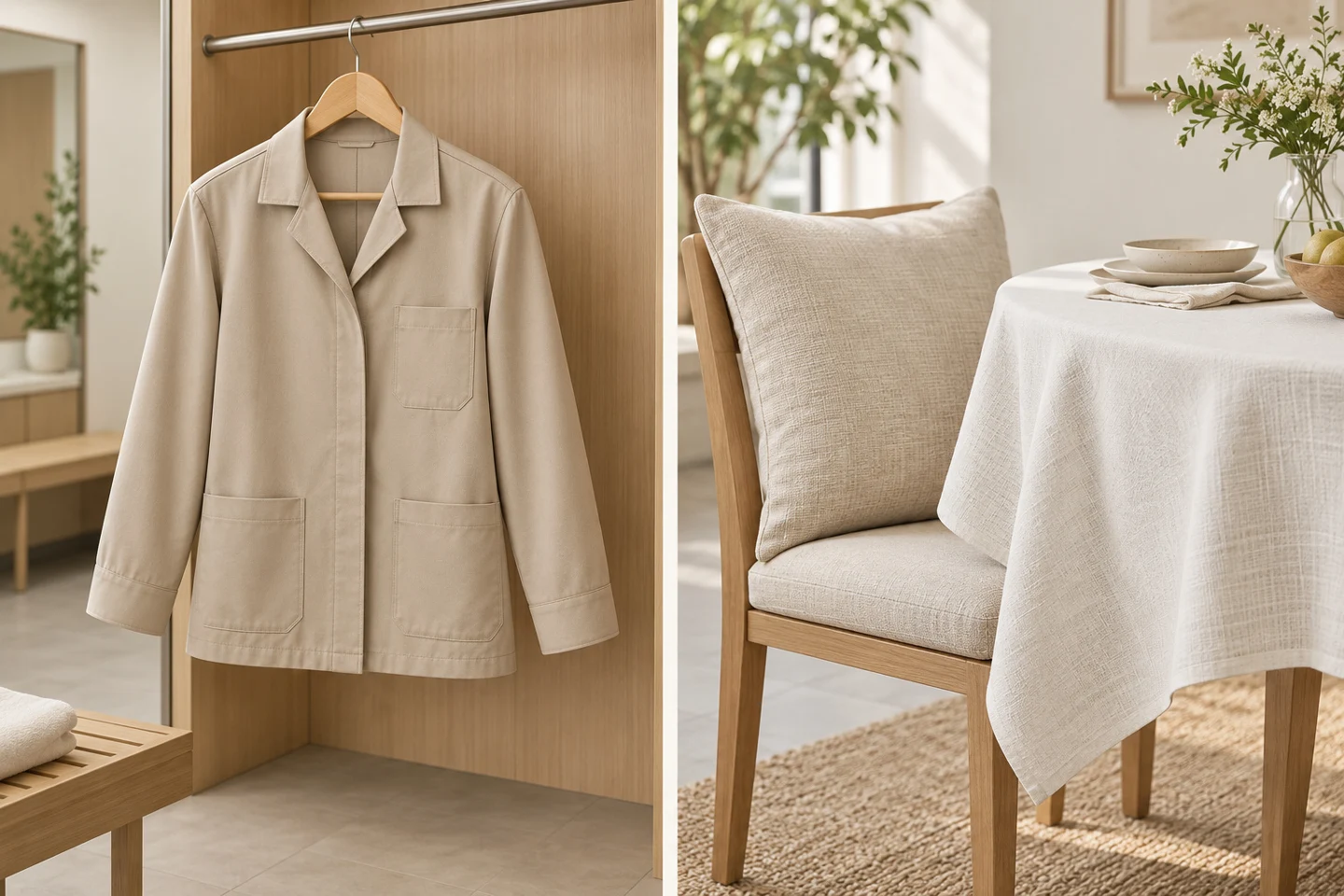
Uniform and workwear fabrics face a demanding combination of repeated wear, everyday contamination and regular laundering. For fabric developers and sourcing teams, easier cleaning can be a useful development goal, but it needs a clear definition and a relevant validation plan.
When considering an easy soil-release yarn, start with the finished fabric and the actual care process. A yarn description provides a material direction; it does not establish how every stain will behave on every construction. The following checklist helps buyers turn that direction into a practical sampling brief.
Understand what soil release is intended to achieve
Soil release concerns how readily deposited soil can be removed during an agreed cleaning process. Surface repellency and stain resistance concern other aspects of contamination, such as initial wetting or penetration. These properties can be relevant to the same garment, but their results should be evaluated separately.
A fabric may resist a brief splash yet retain an oily mark after washing. Another fabric may wet more readily but clean satisfactorily under its specified care conditions. Ask the supplier which property is being described, how it is measured and which finished material the evidence represents.
ANKU’s EASYCLEAN Easy Soil-Release Polyester Yarn offers a starting point for discussing soil-release and easy-care development. Its suitability should be assessed in the selected fabric construction and finishing route.
Choose contaminants that represent the uniform’s use
Identify the soils that matter before comparing samples. Food-service clothing, office uniforms and general workwear can encounter different combinations of oils, drinks and particulate contamination. A result for one soil does not establish equivalent behavior for every other substance.
For a useful comparison, document the contamination procedure as well as the cleaning procedure. Agree on the soil or staining agent, application amount, contact time and any drying or conditioning step before laundering. Keep these conditions consistent across candidate fabrics.
Include the intended color in the trial where practical. A residual mark may be more apparent on one shade or surface than another, so visual assessment should use agreed lighting and rating conditions.
Match the laundering trial to the intended care system
Confirm whether the garment will be washed domestically, through a commercial service or under another defined process. Temperature, detergent, mechanical action, load, rinsing and drying can all affect the observed result. Care instructions also need to suit the complete garment and its trims.
Agree on a repeatable test plan rather than relying on a demonstration with unspecified conditions. Record the method, sample preparation, laundering program and assessment criteria. If a project requires a particular standard, confirm its applicability with the relevant technical team or laboratory.
Evaluate the relevant property after the agreed number of care cycles. This can help establish whether the selected material continues to meet the requirement as it is maintained. Confirm how those cycles will be performed and reported, without treating a laboratory sequence as a universal service-life guarantee.
Test the actual fabric construction and finish combination
Yarn selection, fabric structure, surface texture, dyeing and finishing together influence the material being supplied. A laboratory swatch and a later production construction may differ in ways that affect contamination, washing or visual appearance.
Assess the selected yarn in a representative knitted or woven sample. Record the composition, yarn specification, construction, finished weight, color and processing route. Where a backing, coating or other finish is required, include it in the relevant evaluation.
Compare the candidate against an agreed reference fabric when possible. This gives the team a clearer basis for discussing the result than an isolated claim that a sample is “easy to clean.”
Review appearance, comfort and other required functions
Cleaning performance is one part of uniform selection. The garment may also need a particular handfeel, drape, stretch response, dimensional stability or level of durability. Evaluate these requirements alongside the proposed soil-release direction.
Check shade, gloss, surface appearance and handfeel before and after the agreed care process. If water repellency, moisture management or another function is required, verify that function separately on the final material. Compatibility should be confirmed for the actual combination, since processing changes can influence more than one property.
Use a garment or processing trial to identify practical issues with sewing, pressing, appearance and maintenance. Record observations with the sample version so the supplier can relate feedback to the correct material.
Make the approval reference usable for bulk purchasing
Bring the successful sample and its confirmed requirements into one approval record. A useful record includes:
- The product reference, yarn specification and final fabric construction.
- The approved shade, appearance and identifiable physical sample.
- The soils, test methods, care conditions and acceptance criteria.
- Any repeat-laundering or additional functional requirements.
- The agreed inspection approach and procedure for changes.
Confirm whether reports cover the intended color, finish and construction. For bulk supply, agree how the approved reference will be checked and how differences will be resolved. This makes the development outcome more useful to both purchasing and production teams.
Discuss your uniform fabric project with ANKU
Explore ANKU’s uniform and workwear material directions, then share the end use, target construction, likely soils and intended laundering process. Contact ANKU to discuss EASYCLEAN and the sample evaluation needed for your project.
Your next fabric
starts here.
Share your application. Let’s explore the right material together.